
Shoppingantique collectibles
Wang Shengyi's purple clay teapot is 100% sold
Posted on 3/16/2026
Photos
Description
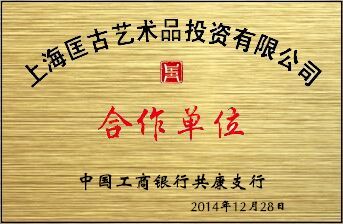
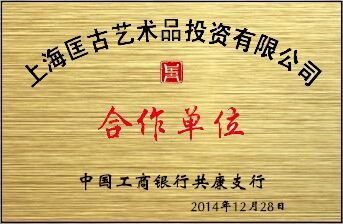
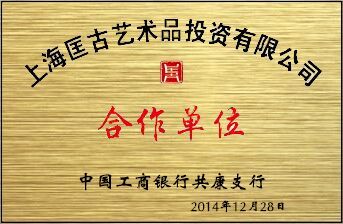
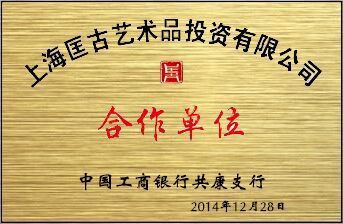
Wang Shengyi's Purple Clay Pot Appraisal, Wang Shengyi's Purple Clay Pot Transaction, Wang Shengyi's Purple Clay Pot Market Value Wang Shengyi is a pot-making master of the older generation. It is said that Wu Yungen and Zhu Kexin once studied under him. LOT number Lot name Transaction price (10,000) Auction date 0119 Wang Shengyi Plum and Bamboo Pot 460,000 2012-10-10 2326 Republic of China Wang Shengyi Lotus Pot 450,000 2011-12-04 0502 Republic of China Wang Shengyi Woniu Pot 340,000 2013-12-31 4761 Republic of China Wang Shengyi Lotus Pot 350,000 2011-12-06 2347 Republic of China Wang Shengyi Four-legged Oval Flowerpot 520,000 2011-12-04 If any collector wants to know where this type of work was sold, the transaction price and other transaction details, as a reference for valuation, you can contact me: a consultation will definitely surprise you and will change your life! Benshan Green Clay: Commonly known as "Benshan Green Clay" and ancient name "Pear Skin Mud". The mineral soil is in the form of light green lamellae, and becomes pear skin jelly color (beige) after being fired into pottery. It is produced in the symbiotic mineral layer of Huanglongshan rock formation and purple mud. It is only a few centimeters thick and is located between the upper layer of purple mud and rock slabs. It is commonly known as "Longjin". Its mineral composition is hydromica, kaolinite, quartz and a small amount of iron oxide. . Benshan green clay: The amount of mining is very small, so it is not easy to make large products. It can only be used as small products and "cosmetic clay". It can be transformed into various colors of decorative clay by adding an appropriate amount of coloring agent. White pockmarked mud: similar in color to Benshan green mud and thick in texture. Because it is in the upper layer of purple clay and has many impurities, it must be carefully selected before it can be used together. It will appear light ink color after the pottery is made. Red pockmarked mud: The color is like purple mud, and the texture is thick. It is located on the upper layer of purple mud, with dots of pockmarked green mud in between. It turns pink after being made into pottery. Red mud: For more detailed information, please contact Mr. Zhang at 13301815832. Commonly known as: "cinnabar mud", "cinnabar mud", "stone yellow mud". It is named because its color resembles "cinnabar red" after it is made into pottery. Produced in Zhaozhuang Mountain, Renshu, Yixing, at the bottom of the tender mud layer, it is as hard as stone. It contains high iron content and the output is very rare. The appearance of the mineral soil is brick red, and the silt rock soil mainly composed of clay can be used to form pottery alone. Red mud has a large shrinkage rate and is fired at a temperature of around 1080 degrees Celsius. It is often used to make small utensils. In the mid-1970s, this kind of red mud was in short supply, so Sichuanbu red mud and tender mud were used instead. The mineral soil was earthy yellow and the stone was hard, similar to the pottery. In the 1980s, pots were made from Hudong red clay. The pots were made of heavy glass and were fired at about 1050 degrees Celsius. The pottery was vermilion in color and had a crisp and bright sound. Other types of clay: From the Ming Dynasty to the present, the color of the clay has varied in various ways, and is ingenious, based on its native land, mountain spirit, and pottery changes. Stone yellow: egg-shaped, with an iron-brown outer shell, a middle core like an egg yolk, fine powder, and a very high iron content. Add purple mud and the pottery will be as purple as grapes. Add azure clay to create a deep patina. Add red mud to form Dahongpao mud. If any collector wants to know where such works were sold, the transaction price and other transaction details, as a reference for valuation, you can contact me: a consultation will definitely bring you surprises and will change your life! White clay: White, slightly greenish, white after pottery is made. It is produced in Dachao Mountain (Sudong), Yixing. It was originally a raw material for daily pottery. Its fine clay is used as the base material, and metal oxides are added to make various colored clays. Earth bone: It is bone-shaped, has high iron content, and turns into black particles after being pottery. It can be mixed into purple sand mud to make star mud. Tender mud: Brick red in color, it was originally a raw material for daily pottery. It is mixed with purple sand mud to increase plasticity and reduce sintering temperature. If the fine mud is used, it can be used as an auxiliary raw material. Shanghai Kuanggu Art Investment Co., Ltd. is a cooperative company guaranteed by the Industrial and Commercial Bank of China, and has European groups coming to our company for procurement all year round. It is a mainland cooperative unit of the Hong Kong Thermal Photometry Inspection Center. Domestic cooperative units: Shanghai Weishide Investment (Group) Co., Ltd., a governing unit of the Chinese Art Collectors Association, Shanghai Huangjie Gallery, Beijing Mo Lezhai Gallery, the 77th National Auto Parts Fair, Hubei Weitong Media Co., Ltd. The company's board of directors promises to all collectors: all cooperative collections are guaranteed to be 100% sold, and full refunds if not sold. Reminder: Don’t rush to remit money or pay a deposit before seeing the real thing to avoid being cheated.
Related Listings
Where to buy antique porcelain
🛒 Shoppingantique collectibles
591-977-1862
Stone lovers sell soapstone ornaments
🛒 Shoppingantique collectibles
814-345-1070
🛒
How about the 2016 Hotan Jade Walking 3rd American Art Auction?
🛒 Shoppingantique collectibles
814-345-1070
Main features of genuine Yuan blue and white
🛒 Shoppingantique collectibles
814-345-1070
🏢
Business
Shopping · antique collectibles